Are we Flourishing? Post II
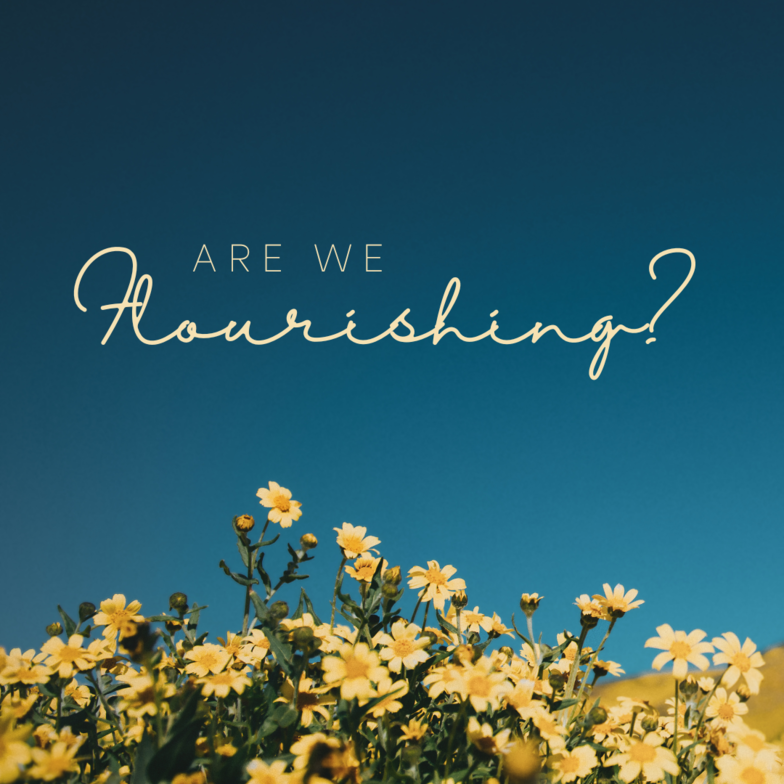
Full of flowers. This is the imagery that I found helpful in the previous Are we Flourishing post, A first take. This post follows as part of year long series of reflecting on the themes of flourishing and the faithfulness of the local church.
Every flower gardener desires a garden that is full of flowers. How do they define what full means?
Jennifer and I had the rich blessing of spending some of the early years of our marriage in ministry with incredible faith communities in equally special locations. Our first home was in a typical South Carolina Midlands neighborhood. Beautifully manicured lawns and flowering plants adorned every brightly colored home in our first neighborhood. Our move date coincided with the spectacle of the Azalea bloom and the deep Spring greening of the South. We packed our few houseplants and pulled out of our driveway, not realizing the changes that we would experience. We took on this particular move with incredible optimism, thee kind that only two young world changing newlyweds could have. We passed through Augusta, home to some of the most beautiful landscape designs in the world, rode through miles of tunnels formed by the deep green of longleaf pine trees in Alabama and Mississippi, and crossed the waterways and lowlands of Louisiana with smiles and hopes. But then, halfway through the journey, the road turned north then west again and the scenery became something otherworldly.
We had visited Albuquerque, our new home, once before. But, we hadn’t driven. We hadn’t seen the change unfold like a picture book until now. We passed the Big Texan in Amarillo with eyes as big as the steaks, experiencing our first mesa view from the windshield. The scenery was indicating a change that neither of us had prepared for. From the deep green sea of rolling hills and pine forests of the South to thee dramatic rise and fall of big skies and windswept plains.
We reached our new home in late afternoon, only having seen pictures that were sent by the lovely church member who had found it for us. It was a lovely home and we thoroughly enjoyed it. But, it was a shock to the senses. A six by ten patch of grass in the front yard, the soft tan of adobe stucco, and a hardscape back patio with no flowering plants in sight.
Even the most luxurious homes shared in this color scheme, or lack thereof.
Our new home and the culture of our new community was definitely not ‘full of flowers’.
But, there was beauty everywhere.
Our definitions needed to change ini order tot see it. Full would need to mean something different. We would need to reimagine what flowers, or beauty, would mean. The things of beauty, that bring joy and peace, would no longer be brightly colored and fragrant pedals. But there would still be great beauty, and our lives would become even more full through our searching.
Thinking about this transitional journey of my past is giving me a new question concerning the theme of church flourishing. I wonder, ‘have we defined the flowers well?’
This is simply another way of asking about expectations. Have we defined our expectations based on the setting?
If Jennifer and I would have fixed our expectations based on the beauty and greenery of the South, we would have lived in a state of disappointment and frustration for a season. Why then am I so unwilling to allow a shift in my expectations of beauty, fullness, and flourishing for the church?
There are, of course, biblical and theological frameworks for the role and responsibility of the church. I do not think that this post is the place to debate those. I do wonder, however, how the metrics of measuring success are contributing to seeing flourishing or finding disappointment.
For the sake of this article, I am going to keep my example as simple and forward as possible. We could converse about all sorts of evaluation tools and metrics, but it has become my experience that the most important expectation for any organization or church is the measurement against what has been experienced in the past.
We have all heard it, or spoken it: “I remember when we had X number in the sanctuary on Sunday” or “what do we do to get that same number in worship that we had back then”
These statements say that I/we can only see full blooms when our past experience of beauty is experienced again. And, its a hard habit to break.
Should we want full sanctuaries? I don’t think its a heretical desire.
Is it bad to look on the past and see beauty? Surely not!
So, what is the issue?
The issue with desiring what ‘was’ is that it, too often, hit is not faithful to where we now find ourselves. Take the long established church of your choosing as a case study. The days of full pews were accompanied by full neighborhoods of socially mobile folks, full factories that were closed on Sunday, and the list goes on.
The easy thing to do, as pastor, is to try to frame the failures of that time that others see as flowering by pointing out those who were avoided and even harmed by the culture which fostered such a church. I am not convinced, personally, that this is the most faithful response, although necessary at times.
Instead, I have taken an approach of asking ‘why’. A disorienting question for most. Not many can say ‘why’ the church was full then, beyond the wider culture of the day. Not many can say ‘why’ that memory stands as the image of blooming mini their mind. Not many can think about ‘why’ that is a meaningful sign of the congregations flowering in that moment, much less this one.
And so, how then do we wonder what full means today?
Can ‘full of blooms’ be measured by the number of folks who are sharing the grace of God with others throughout the week? The impact of social change by the collective? The way people are welcomed? The care that is offered and received? The number of lives which are transformed spiritually AND practically?
The only response, and its a messy one for we United Methodists, is to harness the gift of small. A gift that allows for contextually and fluidity to afford the cultural surroundings to inform the practical outcomes.
Did Jennifer and I get it right in Albuquerque? Absolutely not. The journey of redefining gave me, much more than her, a lot of heartburn. But, we tried. Im convinced, in this moment at least, that this is all that we can do.
We can try.
We can try to digest the reality of christendom and the impacts of the cultural shifts around us and search for beauty that makes sense for this moment and this particular place. We can read the scriptures and discover a theology of the church which describes faithfulness and flourishing by the full impact of the church on its community, not only on its worship attendance. We can try to keep an eye on the way that grace is offered and transformation is being enabled across the whole life of a congregation and by its people in partnership and on their own. We can try to not judge todays beauty by the full blooms of the past.
The environment has changed. Let’s not make that fact an excuse. May we instead create new expectations that are faithful to the objective of the Church and to the cultural ground where we now find ourselves.
-Pastor Jason
Saint Francis de Sales (1567-1622) is remembered for saying “Truly charity has no limit; for the love of God has been poured into our hearts by His Spirit dwelling in each one of us, calling us to a life of devotion and inviting us to bloom in the garden where He has planted and directing us to radiate the beauty and spread the fragrance of His Providence.”